Quiet Room or Open Window: Choosing a Pause That Suits the Moment
Choose a quiet-room or open-window pause by matching the break to your attention, energy, and surroundings, so you can return with less friction.
The common mistake with a quiet-room or open-window pause is treating it as a miniature break between tasks. That framing can turn rest into another transition to manage. Choose by the quality of attention you want to offer yourself, not by how quickly you can get back to work.
A quiet room invites attention to settle on something familiar. A view through an open window invites it to linger on something beyond the room. Neither needs to lead to a task, a reset, or a better mood. The useful question is simply where your attention can be without being recruited.
Quiet as permission
A calm indoor spot can give you permission not to respond. Sit in a bedroom, a corner away from other people, or a chair facing a plain wall. You do not need perfect silence: the aim is to be less available to new demands, not to remove every sound.
Put a phone out of sight if its screen tends to call for a response. Leave it nearby if you need it for an urgent contact or a familiar sound. Lower a lamp, close a laptop, or leave the room as it is; make only the change that helps you feel less on call.
Silence is not a requirement. A fan or other steady household sound may feel more comfortable than a quiet room. If being alone makes your thoughts feel louder, choose a shared space with gentle activity rather than insisting that solitude must be restful.
A view without a task
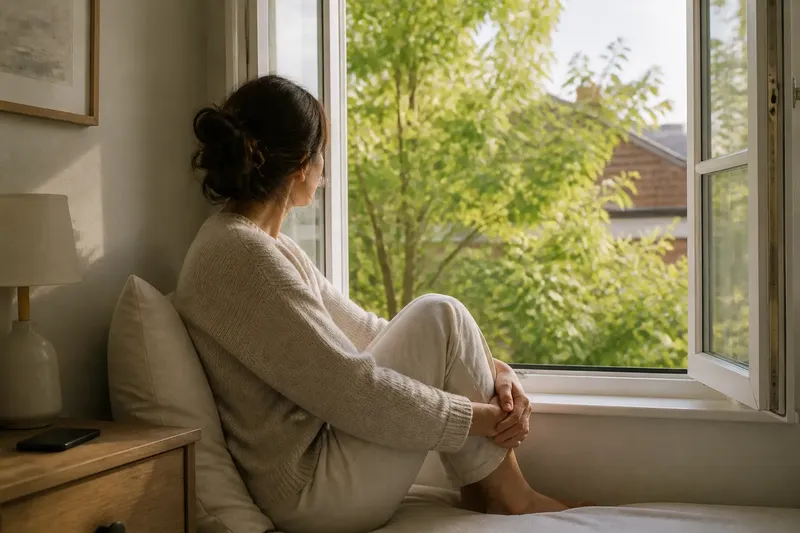
An open window or nearby view offers something to notice without asking you to act on it. Let your eyes rest on a tree, a neighboring roof, passing clouds, or the changing light on a wall. You can stay seated; the point is not to turn looking outside into an outing or an exercise.
If the window is closed or cannot be opened, a place beside the glass can still offer a different view. A balcony, stoop, courtyard, or sheltered entrance may suit you if it is comfortable to reach. If weather, noise, or other people make those places unwelcome, stay indoors and choose a view that feels easy.
Do not search for scenery impressive enough to justify the pause. An ordinary view is enough if it gives your attention somewhere to rest. It is not worth rearranging a room or planning a special spot for an occasional pause.
Choose by attention
Instead of deciding which setting is better, notice what you want to stop attending to. Use a quiet room when you want fewer invitations to respond; use a window view when you want to look outward without taking on a new activity.
- Observation: Conversation or household noise keeps pulling your attention. If you can move to a calmer room, then sit there; otherwise use a familiar sound or a comfortable corner to soften the interruption.
- Observation: You keep checking a screen or waiting for a message. If it is safe to be unavailable briefly, then put the phone out of sight; otherwise keep it nearby but turn its screen away.
- Observation: Your eyes keep returning to the same work surface. If a window is available, then look outside; otherwise choose another still object in the room.
- Observation: Being alone or in silence makes you more uneasy. If a shared space feels comfortable, then sit there; otherwise stay in a familiar room with gentle background sound.
- Observation: Outdoor noise, weather, or access feels like another demand. If the window view is comfortable, then stay beside it; otherwise choose an indoor spot and skip the trip outside.
- Observation: You are unsure which setting you want. If one option feels easier to enter and leave, then choose it; otherwise stay where you are and let the room remain unchanged.
Say you are sitting in a quiet bedroom with your phone face down, and a tree is visible through the window. You notice that the silence is making you dwell on a worry, while the tree gives your eyes something neutral to follow. You move to the window seat and watch the leaves for a while; the observable result is that your attention has a simple place to rest, not that the worry must disappear. If the view instead feels distracting, you can return to the chair without treating the choice as a failure.
Questions about pauses?
How long should a quiet-room or open-window pause last?
Choose an interval that fits the space you have and stop when you want to. There is no need to wait for a particular feeling or make the pause last long enough to count as an achievement.
Should I leave my phone behind?
Put it out of sight if the screen keeps inviting you to respond and you can safely do so. Keep it close if you need to remain reachable, and turn the screen away if that reduces distraction.
What if I cannot open a window?
Sit beside the glass or choose another view, such as a plant, a doorway, or a patch of light. If looking outward does not appeal, stay in a familiar spot and let your attention rest without changing the room.
Is silence necessary for rest?
No. A fan, quiet household sounds, or gentle activity nearby may feel more comfortable than silence. Choose what makes the pause feel less demanding rather than following a rule about quiet.
Leave room to choose
A quiet-room or open-window pause does not have to mark the start or end of anything. It can be a moment when you stop offering your attention to a screen, a conversation, or even the effort to feel different. Let the setting support that choice, and change it if it does not.
If neither quiet nor a view feels right, you can remain where you are and notice nothing in particular. Rest does not need to produce a result to be worth allowing.