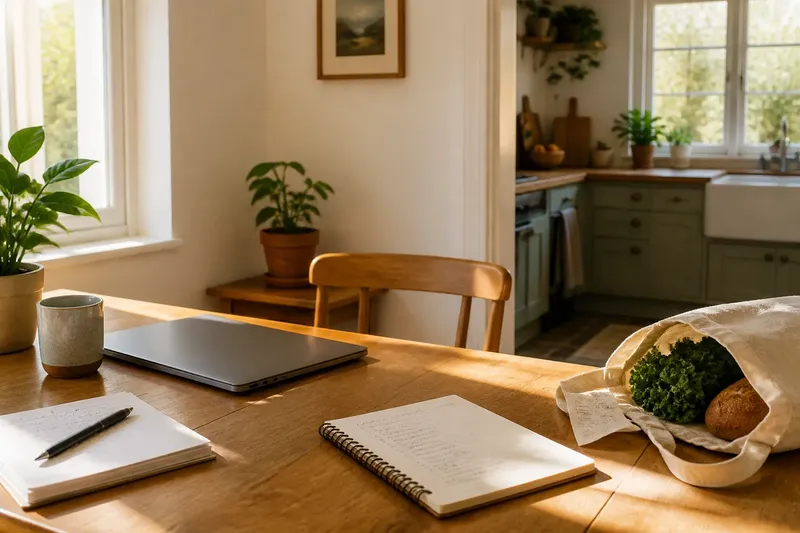
Why Familiar Objects Can Make a Room Feel Settled
Familiar objects can make a room feel settled without new furniture or matching decor; learn what to adjust when a space still feels oddly impersonal.

The most common mistake with familiar objects is adding more of them when a room still feels unsettled. That costs space and attention without solving the real problem: the objects may be hidden, awkwardly placed, or disconnected from how you use the room. A few familiar objects can make a room feel settled when they are visible in the places where daily life happens.
When objects disappear
A keepsake tucked into a drawer cannot contribute much to the feeling of a room. The same goes for a favorite mug stored behind rarely used dishes or a book stacked beneath a pile of mail. These objects may matter to you, but their presence in the room is hard to register.
Choose one object you already reach for or enjoy seeing. Give it a clear, ordinary place: a mug on an open shelf, a paperback on the side table, or a small framed photograph on a desk. Keep the spot easy to use and avoid turning it into a display that feels too precious to touch.
Say you have a smooth stone picked up during a walk and usually leave it in a catchall drawer. Place it beside the lamp where you read. The expected observable change is simple: you can see it during an ordinary evening, and it no longer competes with unrelated clutter for attention.
When placement feels forced
An object can be meaningful and still feel out of place. A treasured bowl placed on a high shelf may look staged if you never use it there; a sentimental picture facing away from the chair where you sit offers little reminder of its meaning. This often happens when people arrange objects for an imagined visitor rather than for their own routines.
Start with the activity that already takes place in the room. Put reading material near the reading chair, a knitting basket beside the seat where you knit, or a favorite serving tray where it can be brought out easily. If an item has no practical role, place it where your eye naturally rests while you sit, work, or pass through.
Move one object at a time, then use the room as you normally would. If you keep shifting it out of the way, the location is not working. Try a surface that suits the object’s size and your habits, or choose another object instead.
When a display looks too busy
Several meaningful objects can blur together when they crowd a narrow shelf or cover every open surface. The room then asks you to notice too many things at once, and no single item gets the space to feel familiar. This does not mean you need a matching collection or a bare room.
Choose a small group with a natural connection, such as a few books you return to or a photograph beside an object from the same trip. Leave some clear surface around them. Put the remaining items in a nearby drawer or another room, where they can stay meaningful without all being on view.
Use the room’s existing materials rather than buying display accessories. A ceramic dish, a folded cloth, or a plain book can give a small object a stable place if you already have one. What is not worth the effort: buying a coordinated set of containers just to make unrelated belongings look like a collection.
When memories feel too strong
Some objects carry grief, conflict, or a difficult period alongside affection. Seeing one every day can bring an unwelcome reminder rather than ease. Familiarity does not require keeping every meaningful item in sight, and putting something away is not a verdict on its importance.
If an object leaves you tense, move it to a drawer or a box you can open by choice. Replace it with something linked to a gentler part of your life, or leave that space empty for now. If the object belongs to someone else or has shared significance, talk with the other person before changing its place.
Where a room is shared, ask which objects help each person feel at home and agree on a few visible places that work for everyone. A shared surface can hold a modest mix rather than forcing one person’s taste across the whole room.
When comfort becomes clutter
Repeatedly adding objects can turn a search for familiarity into a storage problem. Before bringing in anything new, ask whether you can name the object’s place and when you will see or use it. If you cannot, wait rather than buying a substitute for a feeling you have not identified.
Try a brief reset: return objects to their usual places, clear one surface, and notice which familiar item you miss seeing. Bring that one back into view. This is more useful than rearranging the whole room, especially when the unsettled feeling comes from a busy day rather than the space itself.
What should stay visible?
Do familiar objects need to match?
No. A room can feel personal with objects made from different materials and styles. Their connection can be your use of them or the memories they hold, not a shared color scheme.
How many objects should I display?
There is no fixed count. Begin with one or a small group that leaves enough room to use the surface, then adjust if the display feels crowded or easy to overlook.
What if I share the room?
Make space for each person’s familiar belongings in places that suit the room’s routines. A short conversation about what stays visible can prevent a personal comfort choice from becoming a shared frustration.
Should I keep an object that makes me uncomfortable?
No; you can store it, move it, or let someone else keep it if that is appropriate. If the choice involves shared property or a difficult loss, take time and seek support from someone you trust.
Let use shape the room
When a room still feels impersonal, look for the gap between what matters to you and what you actually see or use there. Give one familiar object a sensible place, then notice whether it fits the room’s ordinary rhythm. Familiarity grows through repeated, comfortable contact—not through a redesign or a perfectly coordinated shelf.